NEW
Museum ABC
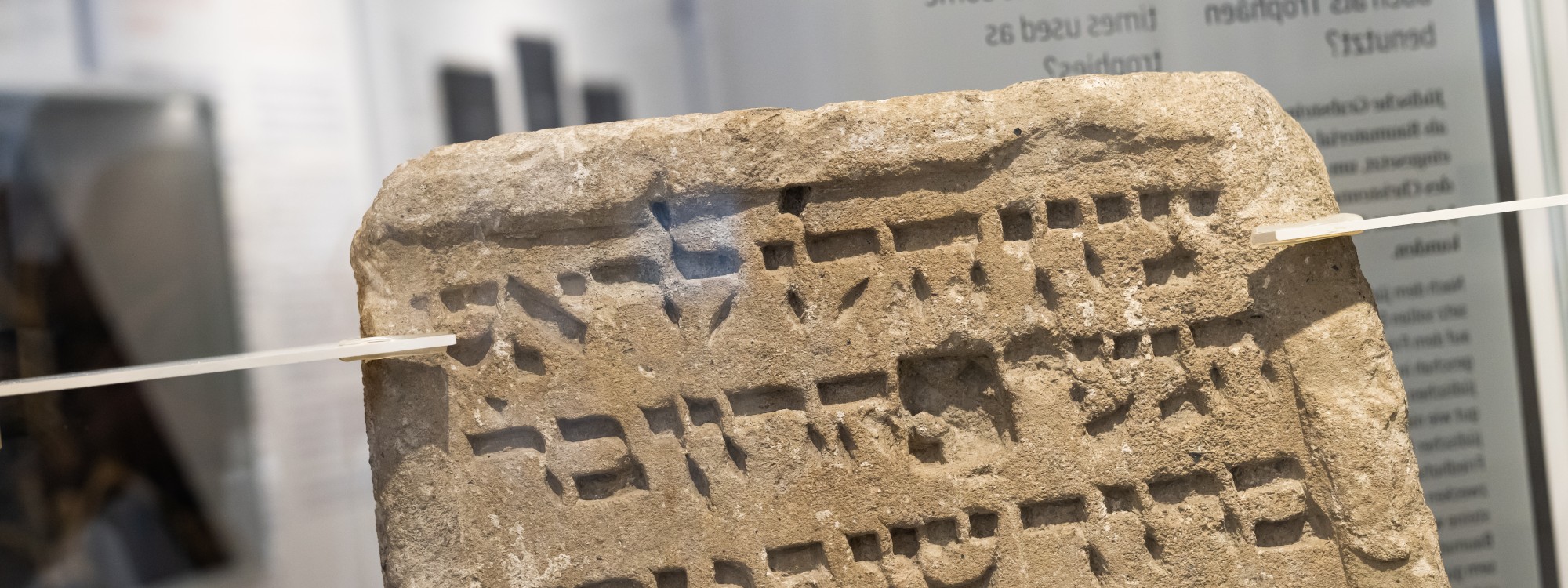
For every letter of the alphabet there is one or more concepts and a matching object, of which only a part is shown on the photo. From Chanukah to marriage, from dietary laws to Yom Kippur, from Vienna to Israel, from anti-Semitism to the founding of the State of Israel, from loss to new beginnings – lots of different subjects are dealt with in this education program, which can be adapted to the level of the group and their interests. As a starter, we find out what the young visitors actually want to know – about Jews and their history, about art and culture.
(years 7–13)
NEW
As simple as that? As simple as that!
In this program the participants themselves decide what they want to talk about. They are invited to seek out with their cellphone or camera an object that they like and another one that they don’t understand or like – for whatever reason. It is precisely this that interests us – why are some objects seen as positive and others as negative? Every object tells a story and also reflects culture: Jewish history, religion, and the museum itself are the subjects of our dialog. We let the participants choose and start out from their interests and identity.
(years 7–13)
NEW
Ok – Dobro – Tamam – Beseder / Objects and stories from Vienna and the world
In this program “new” objects are introduced to the museum. Participants bring an object with them that has something to do with their own history, life, or home – in Vienna or elsewhere. In combination with objects from the museum collection a dialog is created about migration, arrival, identity, and belonging. We take photos of the objects and write up their stories, which can then be read in the gallery on our website.
(all age groups)
NEW
Day of rest – the things you can do when not working
An interesting and creative education program about one of the most well-known Jewish festivals – Shabbat, the weekly day of rest. Is it true that you are not allowed to work, turn on the light, use your cellphone, drive a car, or take the subway? Starting with the search for objects in the display cases that are connected with Shabbat a free association takes place – candlesticks, cups, containers, and plates are the “protagonists” in our investigation of the Jewish day of rest. The information and details are provided by the education staff, and a concluding discussion considers what rest and not working actually signify.
(all age groups)
Please touch
Normally it is strictly forbidden to touch museum exhibits. This prohibition also applies in the Jewish Museum Vienna, but we have selected some things and objects that have to be touched! Without looking, you have to feel the objects and guess what they are: a candlestick, a kippa, a clown’s nose, or an apple? All of the objects are connected with Jewish festivals or the Jewish community of Vienna. After the “hands on” encounter, we will look for matching objects in the display cases throughout the museum. Touching, seeing, looking, and understanding: lots of information and history in small objects.
(Elementary school)
Best crown in town
A Judaica contest for very young visitors. The Torah scroll and its splendid ornaments play the lead roles. Ideal in combination with a tour through the synagogue; new Torah crowns will be designed in the museum.
(Elementary school)
Night in the Museum. Celina’s stories
We will invent (during the day) stories about the museum objects and what they get up to in the night: Chanukah menorahs organize a party, Pesach dishes look for new display cases, besamim containers for Shabbat dance the tango, and a Torah crown escapes from the museum. This program can be booked with Celina, the museum doll. She lives in the museum and therefore knows simply EVERYTHING about the objects. The stories and photos of the “protagonists” will be posted on the website. Hollywood directors can then read about our “museum stories.” If you want, you can paint the film objects in school and send them to us.
(Elementary school)
How do you celebrate?
An amusing program on the festivals and holidays in the Jewish calendar and how things can be different to what they first seem.
(Lower, middle and upper grades)
From beginning to the end
The well-known program on the Jewish life cycle in our new studio. Objects from the museum and everyday life will tell their stories here; students will re-design the room; cultural exchange creates exhibitions.
(Lower, middle and upper grades)
New collection
See. Search. Find. A rally with items and objects if you want to see everything, but have only a little time or if you want to see a little of everything.
(All age groups)
Spelling Museum
Jewish history and culture, festivals and celebrations, past and present, time and memory, even the museum itself will be explored by using terms that have to be found directly on objects.
(Middle and upper grades)
Through history
A stroll through the museum is also a historic tour through Jewish Vienna. Young visitors can discover the history of this city with the help of photos. What was? What remains? What is exhibited?
(Upper grades)
Things/Objects/Stories
The famous art installation “Remembrance/Renewal” by Nancy Spero is the starting point for a program with historic focus for the first time. The figures and their biographies used by the artist will be made use of by the students to approach Jewish history. This program will also explore what the museum is about and what it does to people and items when it displays them.
(Upper grades)
Kurt and Ilse
1938 – 1945. (Survival) Life in Vienna. The well-known program in a new setting, as Kurt Mezei’s diary and the notebook of his sister Ilse are on display.
(Middle and upper grades)
Lilly
A box full of items and a story about survival and remembrance. The atrium, which is the new location of the box, will lead us to a discussion on how and whether memories can be exhibited.
(Middle and upper grades)
What are you looking for? What do you see?
Margit Dobronyi’s photo family gives us an intimate glimpse into the history and present of Vienna’s Jewish community. The people depicted in her pictures become fictional museum visitors in this program: students will take on their role and look for a favorite item in our exhibitions. This allows students to get a feeling for everyday life and festivals, past and present, history and memory, as well as to the institution of a (Jewish) museum.
(Lower, Middle and Upper grades)