24. February 2026
director's column
The invisible Woman
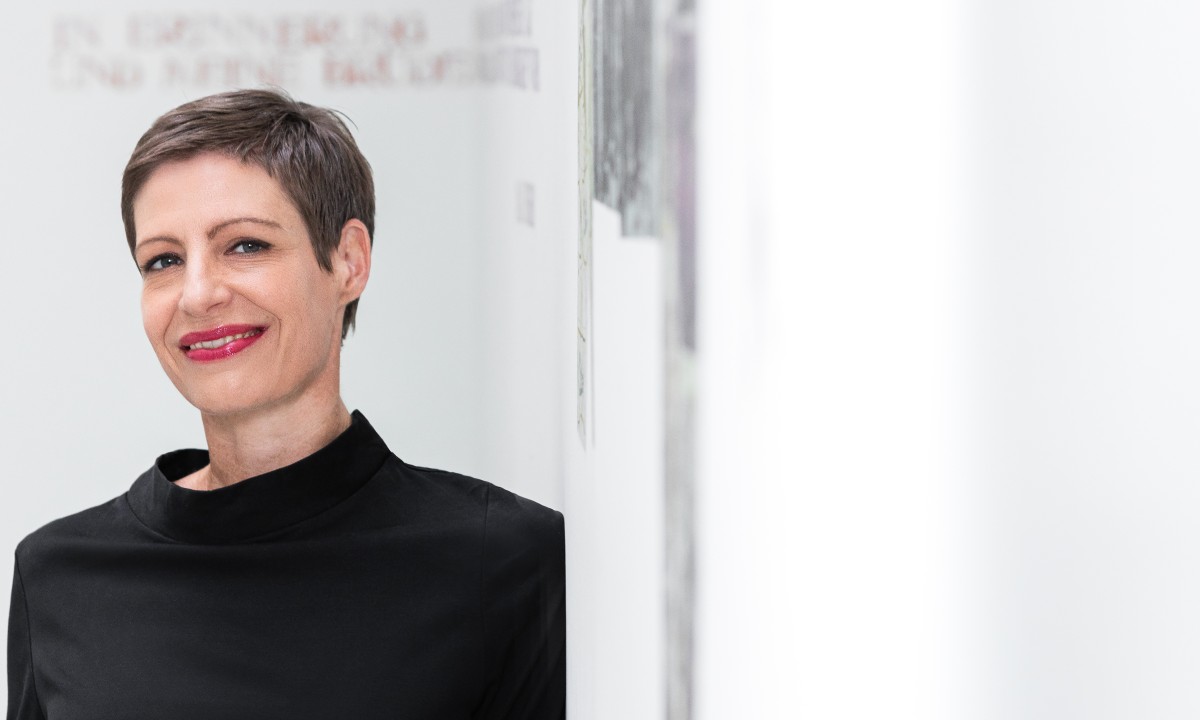
by Barbara Staudinger
In 1993, the first novel by the American writer Siri Hustvedt was published under the title The Blindfold. Whether the title has an autobiographical dimension is not known, but the possibility seems plausible. Before this novel brought her international recognition, the author herself had often been invisible, or at least stood in the shadow of her famous husband, Paul Auster. She is by no means the only one in such a position.
On the occasion of International Women’s Day on March 8, I would therefore like to write about these women: those who are invisible, or more precisely, those who are rendered invisible by the media, by academia, and by museums and archives. Until the 1970s, history was told primarily as a male narrative. Men directed the destinies of states and nations, men drove scientific progress, and men appeared as artists, inventors, patrons, poets, and thinkers. The emergence of women’s history changed this dynamic. This long-overdue shift in perspective made clear not only that there had always been influential, inventive, and courageous women, but also that the prevailing male-centered narrative required fundamental reevaluation. In Jewish history, this shift took even longer; Jewish women’s history has been written only since the 1980s, and many Jewish museums and scholarly works continue to present Jewish history primarily through a male lens. Although much has changed in the meantime, much work still remains.
The Jewish Museum Vienna, like any museum of cultural history, holds a portrait collection. Most of the portraits depict men, and only very rarely do we see women. One reason is that men commissioned portraits more frequently than women. Another reason, however, lies in the nature of the museum’s collections: the men’s portraits were in most cases donated to the museum, usually by the individuals portrayed. By contrast, most of the women’s portraits had to be acquired by the museum. Men therefore ensured their own legacy and shaped the writing of history themselves, whereas women did not, and as a result remained unremembered for far longer.
Maria Austria, Irma Schwager, and Anna Sußmann were resistance fighters against the National Socialist regime, just as their husbands or partners were. They forged passports at the risk of their lives or participated in so-called Mädelsarbeit, whose goal was to convince German occupation soldiers to engage in resistant acts such as passing on information. Despite this work, and in some cases even today, these women’s contributions are described merely as “assistance in the resistance,” a formulation that assigns them a subordinate role and diminishes their significance. The men, by contrast, were readily recognized as resistance fighters, which fit more comfortably into a patriarchal understanding of history.
Friedl Dicker-Brandeis is well known within Jewish historical scholarship because she taught drawing to children in Theresienstadt, providing them with moments of creative escape from the brutality of camp life. What is far less known is that she was herself an outstanding artist, designer, and educational reformer. Stephanie Shirley, who escaped Vienna on a Kindertransport and later founded a highly successful software company, introduced herself as “Steve” in professional contexts because she feared she would not be taken seriously as a woman.
The list of women whose work has gone unrecognized, or who have not been seen at all, could be extended indefinitely. Their number is large, and museums, as repositories of history, have played a part in the fact that these women remained invisible for so long and in some cases still remain so. As a Jewish museum, we see it as our responsibility to change this. Jewish museums seek not to present Jewish men and women as mere objects of history, as people whose lives were shaped only by external forces, but to explore their perspectives, their possibilities for action, and the ways in which they acted as agents of history. With this approach, it becomes our task in particular to research and collect women’s biographies, since these have received far less attention until now.
On International Women’s Day, women of the past and the present are often, as the saying goes, “brought to the forefront.” This is not what we wish to do, because we have no intention of letting them disappear behind the curtain again afterward. Instead, on this occasion we want to remind ourselves that our task is to look closely and to tell history from multiple perspectives, and to take these perspectives seriously. In the twenty-first century, the following remark by Stephanie Shirley should, in fact, have long since lost its relevance: “You can always recognize ambitious women by the shape of their heads. They are flat on top from the constant patting by others.”