15. January 2026
Expo Window

Widdewiddewie

by Hannah Landsmann
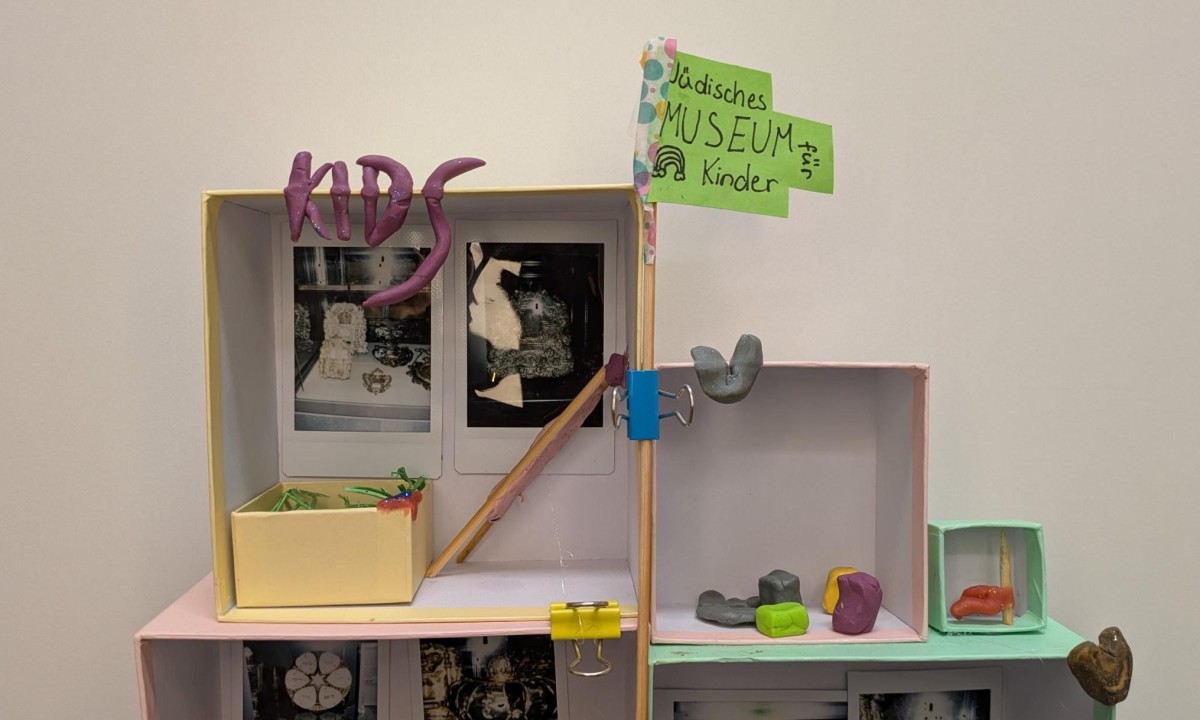
Small diorama with the word "KIDS" made of purple modeling clay, two photos in the background, and a small yellow box with green decoration in the foreground.
© JMW
A Jewish Museum for Children, designed by a young designer, 2025
 
As we brainstormed ideas for a summer program for children, we quickly thought of Pippi Longstocking and her cool song about her colorful house, the little monkey, and the horse. Astrid Lindgren’s most famous story was published in 1945, so in 2025, Pippi Longstocking celebrated her 80th birthday. Nevertheless, Pippi is still 9 years old, has kept her braids, and makes the world the way she likes it - and we assume she would certainly want children to enjoy the museum world too. But what does this museum world actually look like?
 
Are museums even places for children if they don’t have dinosaurs, technical gadgets to try out, or aren’t the Zoom Children’s Museum? All over the world and in almost all museums today, there are programs for children. Every curator and museum director knows they must exist, even if this “children’s level” often falls to museum educators who, once the exhibition has been installed, have to come up with ways to present content and themes in an age-appropriate manner.
 
In 2016, the National Museum in Warsaw presented the exhibition The “Anything Goes” Museum. Exhibition curated by children, which was organized without adult curators. The themes, objects, architecture, texts, and even the opening were all placed in children’s hands.
 
As impressed as we were by this idea, we unfortunately could not replicate it at the same level as the National Museum Warsaw. Instead, we tried something similar on a much smaller scale with our first collaboration with the Summer City Camps, which offer children and teens sports and creative activities during the summer holidays. We would like to sincerely thank our colleagues for their excellent cooperation in creative and administrative matters.
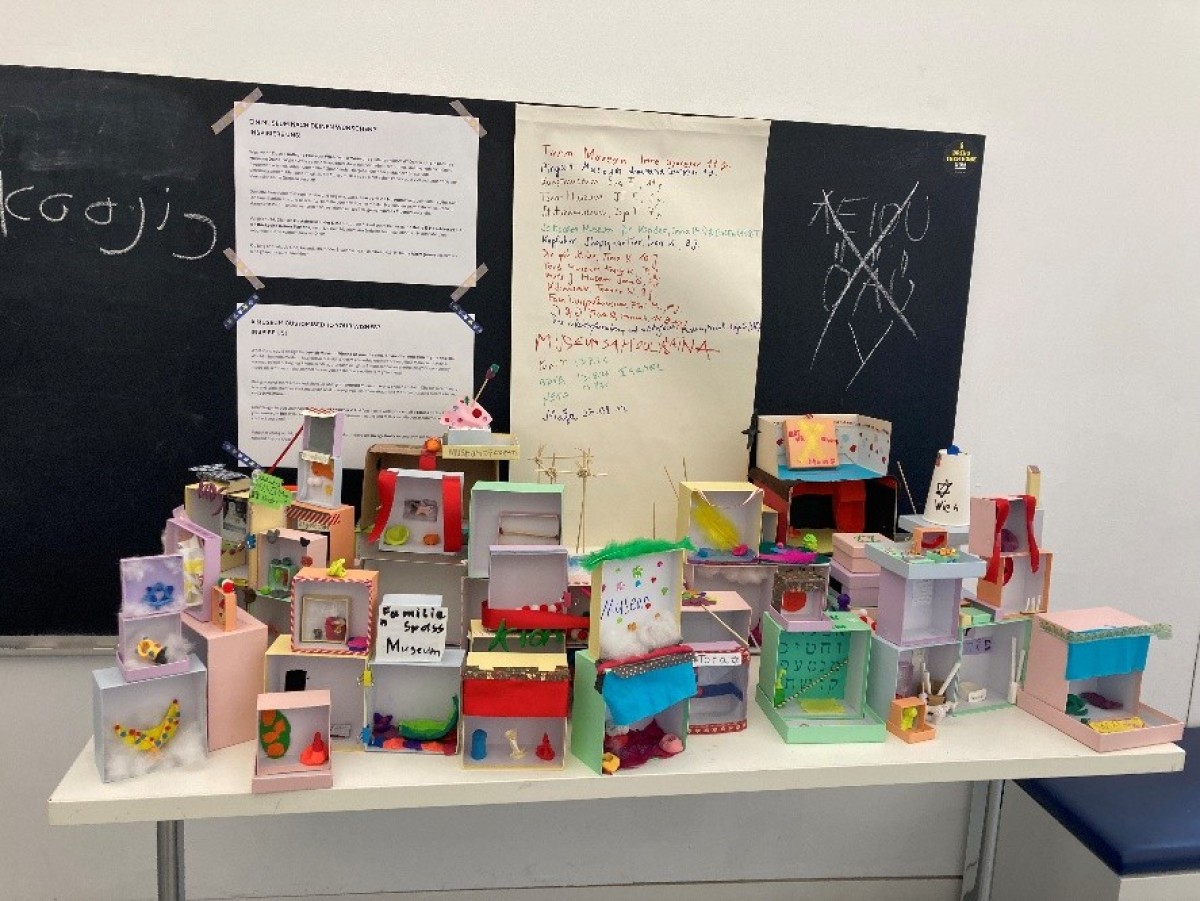
 

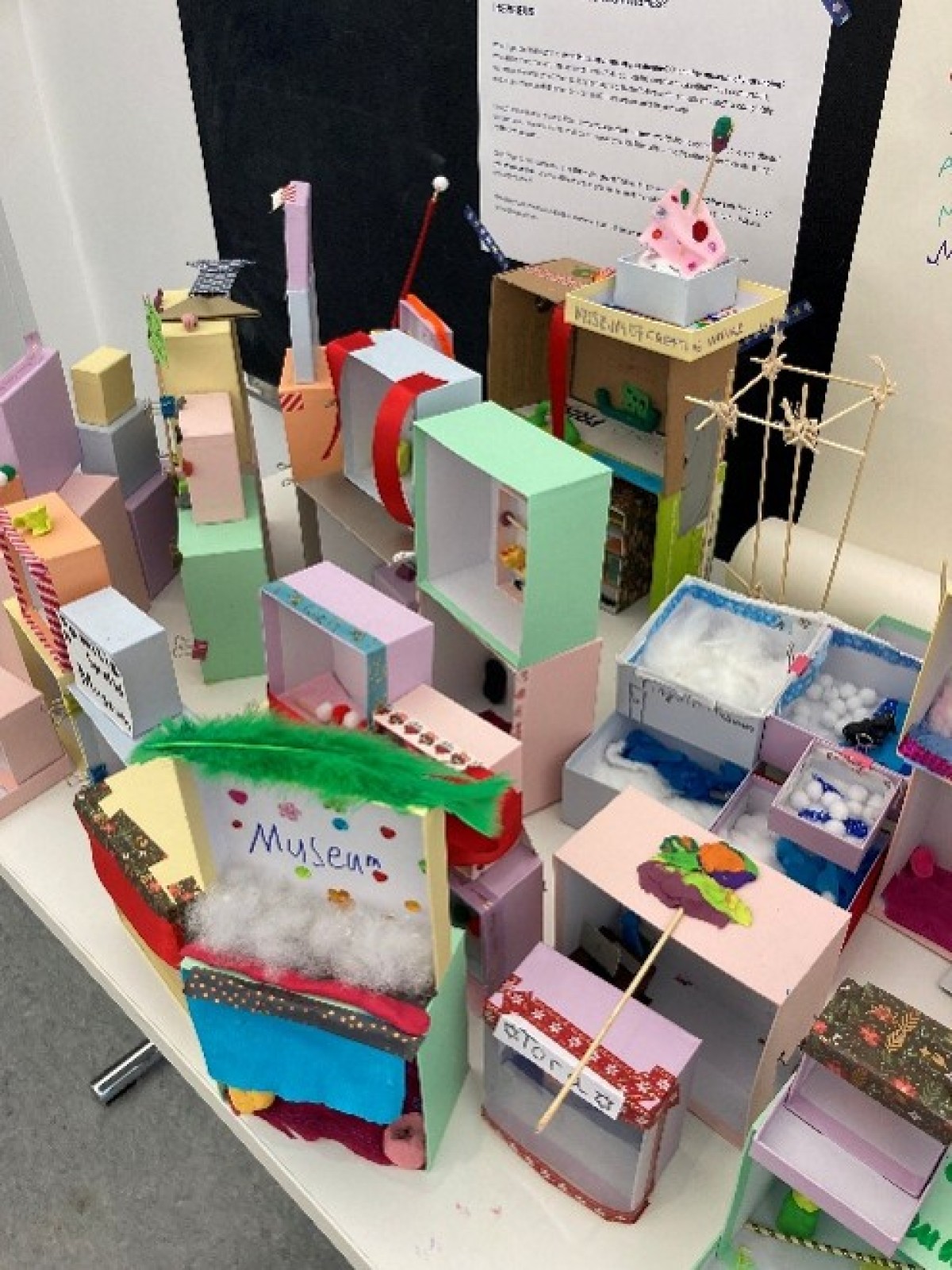
: Several small, colorful model houses made of cardboard and paper are displayed on a white table in front of a blackboard with handwritten texts and drawings.
© JMW
The museum spaces by the young designers, 2025
 
In the summer you might prefer swimming, playing ball, or eating ice cream, so the museum must never be boring. The children’s activities must take center stage. To get to know the Jewish Museum, the first item on the program was a tour that focused on getting to know the space, taking a closer look at the architecture, light, design, colors, floors, and the sound of one’s own in the space. Walking through four floors, you see a lot, and those curious enough ask questions. The Jewish Museum has a rich history and this building in which it is housed had various owners and tenants. This way, the children easily get to know historical figures or notice the large number of objects in the third-floor permanent collection that play a role in Jewish holidays or decorate the Torah scroll. In the stairwell, a large photo of a bicycle with Theodor Herzl adorns wall. Naturally, the children asked about the pictured bicycle. It used to be on display at the museum, but Adam Opel’s bicycle “Victoria Blitz” is now back in the Literature Museum Altaussee. Theodor Herzl appears often in the museum, but without that photo in the stairwell, he and the impressive Victoria Blitz might never have been mentioned.
 
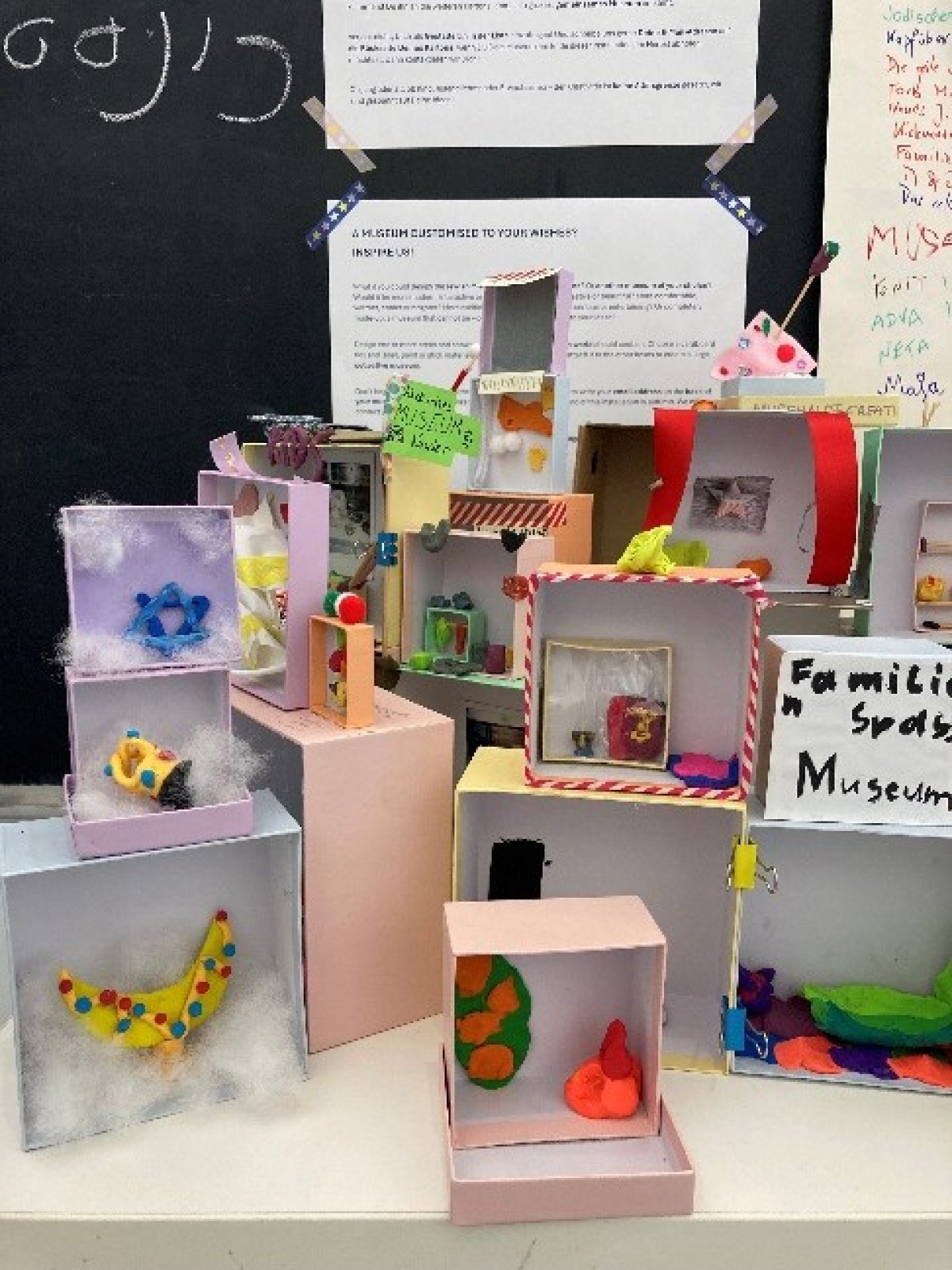
: Several colorful handmade models made of cardboard and paper are displayed on a table, including one labeled 'Museum'.
© JMW
: Several small colorful dioramas made from cardboard boxes with various figures and decorations, displayed on a table in front of a blackboard and white text sheets.
© JMW
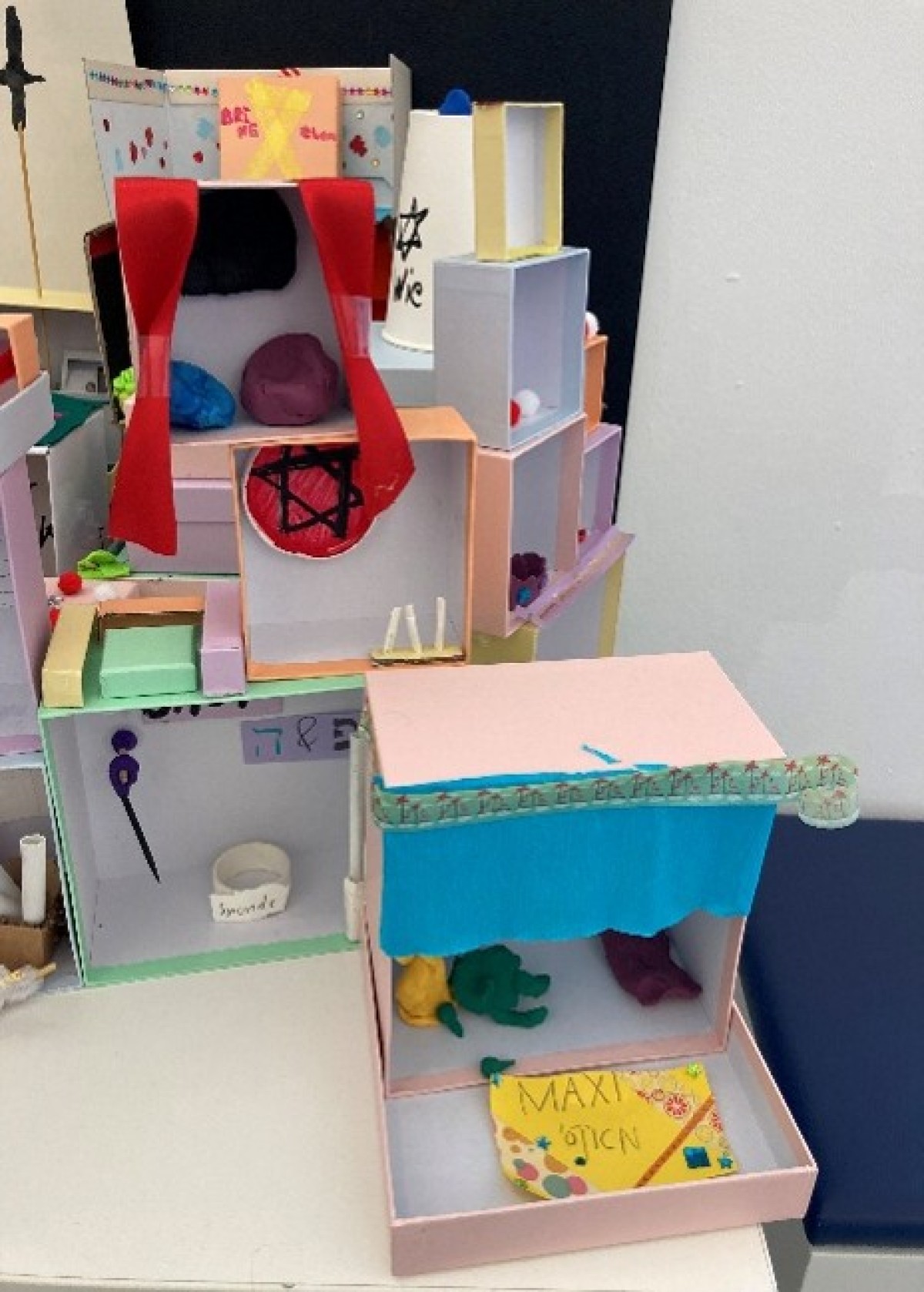
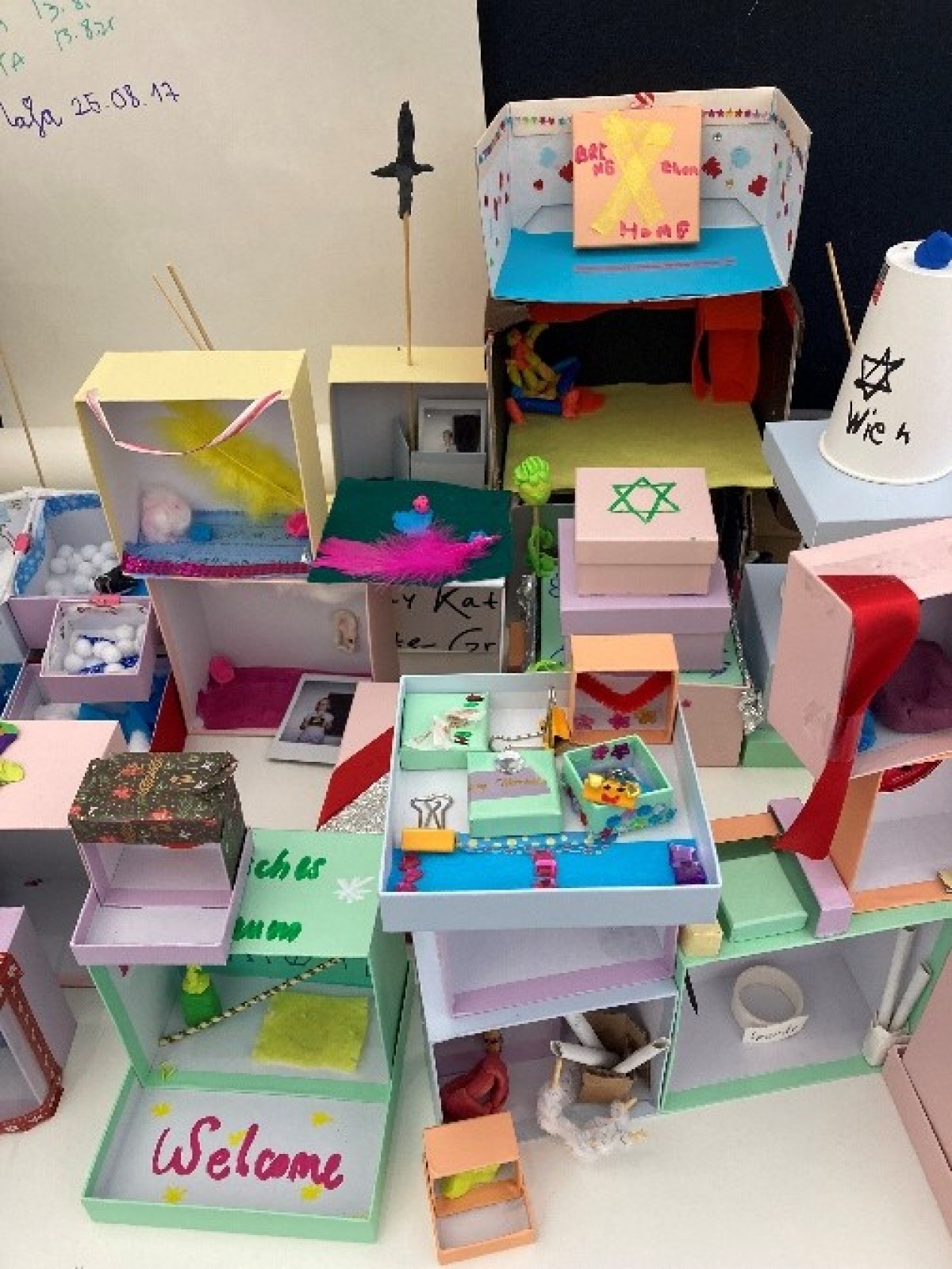
As for materials for the new museum spaces, we spared no effort or expense: countless sturdy boxes in various sizes and colors, a large amount of paper of all kinds, modeling clay, fabrics, cotton, skewers, paper cups, and much more were used to represent the museums as imagined by the children. The young designers valued space and calm, clarity and freedom. In contrast to the mass display of objects in a large showcase on the third floor, for example, a single Torah pointer in bright red modeling clay was presented in its own room - less is often more and may even enhance the experience. Cats might not hurt either, nor a container of “rage balls” in case things get hopeless. It’s obvious that museums also deal with emotions, and not everything is nice and colorful.
 
That the young designers are in a Jewish museum is, of course, always relevant. After all, the exhibitions tell stories of Jewish culture, history, and present-day life, which are part of the city, even if you don’t have to point it out every minute.
 

: Model of a multi-story dollhouse made of cardboard with colorful details, curtains, and small figures.
© JMW
We’ve long known that you can have fun and even laugh in Jewish museums, and we will continue to ask children to share their vision of the museum world with us - surely that can’t hurt.
 
Pictured: the museum spaces by the young designers, 2025

: Several colorful handmade miniature models made of paper and cardboard, including one with a green Star of David and one with the word 'Welcome'.
© JMW