Lisa Silverman " The Postwar Antisemite. Culture and Complicity after the Holocaust"
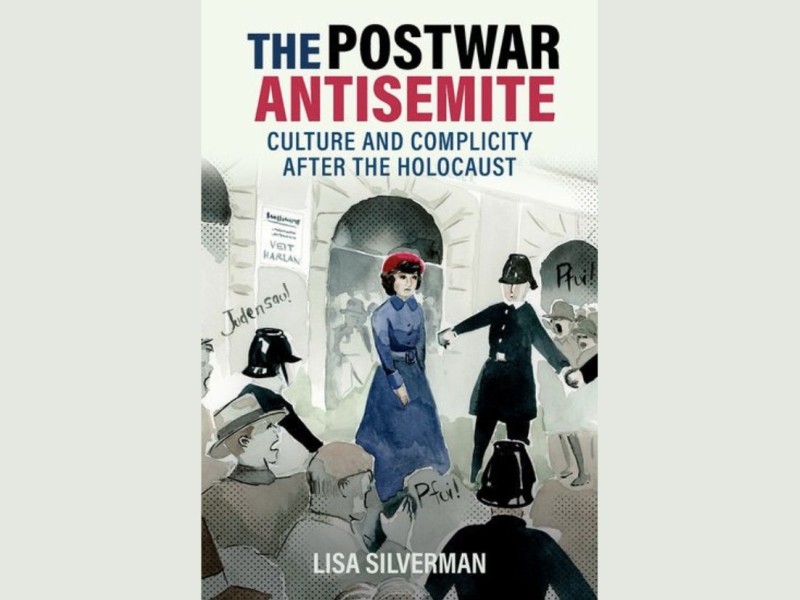
In "Anti-Semite and Jew", Jean-Paul Sartre famously wrote, "If the Jew did not exist, the anti-Semite would invent him." With this claim, Sartre suggested that the Antisemite alone – a figure seemingly separate from both the writer and his audience – is responsible for creating and perpetuating negative stereotypes about Jews. After the Second World War, this constructed figure became a powerful cultural tool, enabling Austrians, East and West Germans, and others to distance themselves from antisemitism and to redefine personal and national self-identification. Long before the Nazi persecution of Jews became a central moral paradigm in popular culture, the figural Antisemite played a pivotal role in the narratives of trials, films, and literature that allowed anti-Jewish biases to endure, even as openly expressing such views became socially unacceptable. Lisa Silverman is Professor of History and Jewish Studies at the University of Wisconsin-Milwaukee. She specialises in modern German and Austrian Jewish cultural history, with a focus on antisemitism, gender, and visual culture. She is the recipient of fellowships from the Vienna Wiesenthal Institute for Holocaust Studies (VWI) and the Internationales Forschungszentrum Kulturwissenschaften (IFK); in 2022 she served as Michael Hauck Visiting Professor for Interdisciplinary Holocaust Research at the Fritz Bauer Institute for the History and Impact of the Holocaust at the Goethe-Universität in Frankfurt am Main. "The Postwar Antisemite: Culture and Complicity after the Holocaust" (Oxford University Press, 2025) is her latest monograph. She is also author of "Becoming Austrians: Jews and Culture between the World Wars" (Oxford University Press, 2012) and co-author of "Holocaust Representations in History: an Introduction" (Bloomsbury, 2015). The book presentation will be followed by commentaries from Éva Kovács (VWI) and Michael L. Miller (CEU). In cooperation with the Vienna Wiesenthal Institute for Holocaust Studies (VWI) and the Jewish Studies Program of the Central European University. |